Climbing To Sobriety by JAy M.
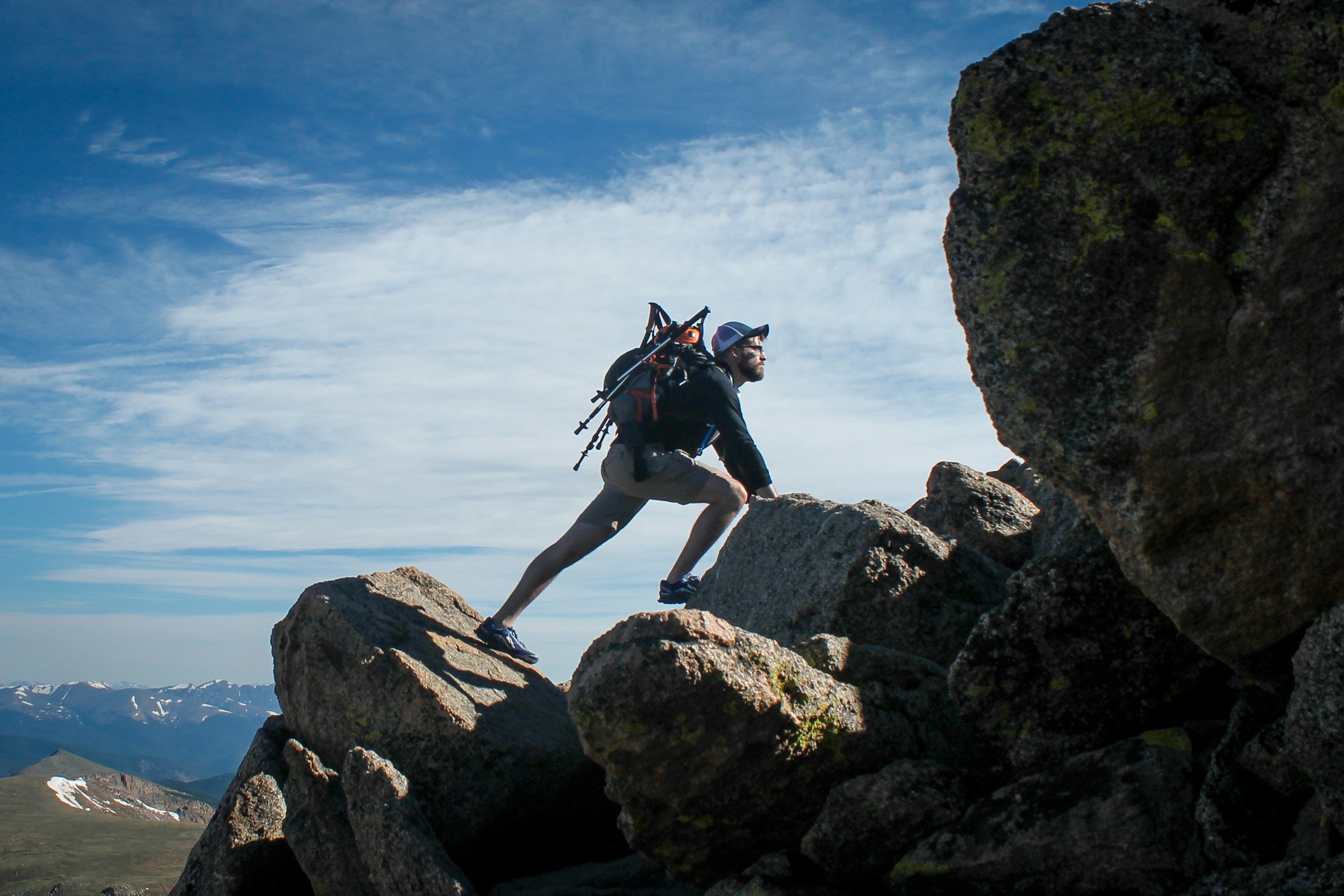
The Dare That Changed Everything
Growing up in suburban Denver, my life was about as vanilla as it gets. My family had a nice house, my parents were supportive, and my biggest stress was whether or not I’d make the varsity basketball team. From the outside, it looked like I had it all together, but inside, I was constantly battling this gnawing anxiety. I was terrified of rejection, paralyzed by the idea of failure, and pretty convinced I was unremarkable. Enter Tyler, my best friend, partner-in-crime, and the instigator of what would become the single most defining moment of my teenage years.
It all started with a dare, one of those stupid, spur-of-the-moment challenges you do to prove you’re not a wimp. Tyler found a bottle of my mom’s painkillers while rummaging through the medicine cabinet for Band-Aids. With a devilish grin, he tossed me a pill and said, "Bet you won’t." And because I was 17, insecure, and overly concerned about my street cred, I popped it without hesitation. What followed was nothing short of magical—my brain finally shut up. The constant loop of self-doubt disappeared, and for the first time, I felt invincible. That pill flipped a switch in me, and from then on, Tyler and I were on a mission to keep the good times rolling.
High School: The Curious Case of Teenage Addicts
You know how D.A.R.E. officers come to your school to scare you straight? Well, for Tyler and me, those assemblies were more like a how-to guide. They’d show us pictures of pills, list off all the “dangerous” effects, and we’d sit there mentally cataloging which ones sounded worth trying. By the time we graduated, we could’ve written our own PSA—“Here’s how to raid a medicine cabinet without getting caught.”
We started small, taking a few pills here and there after school, but it quickly spiraled. Soon, Tyler had a guy—a sketchy junior who worked part-time at a pharmacy and sold leftovers from “mistakes.” Every weekend, we’d pool our cash, buy whatever we could get our hands on, and spend the nights feeling untouchable. The thing is, for a while, it worked. My grades didn’t suffer, I made varsity basketball, and I even worked up the nerve to ask my crush to prom (she said yes, by the way). On the outside, I looked like your average overachieving suburban kid. On the inside, I was completely hooked.
College: Home Is Where the Pills Are
When I got into the University of Arizona, I thought I’d finally made it. New state, new people, new me, right? Wrong. As soon as I set foot on campus, I realized I was in way over my head. I was homesick, overwhelmed, and surrounded by people who seemed to have their lives together. My old buddy opioids? They were my lifeline.
The party scene at Arizona was next-level. Frat houses, tailgates, dorm parties—if it was happening, I was there. I tried everything: weed, shrooms, coke, even a brief (and regrettable) experiment with Molly. But no matter what I dabbled in, opioids were my jam. They made me feel safe, like I could handle anything. I’d pop a pill before class, before parties, even before calling my mom to assure her I was doing just fine. By junior year, I was fully committed to fentanyl. “Blues” were my drug of choice—cheap, potent, and everywhere.
Things took a dark turn when I started skipping class to chase my next high. My GPA plummeted, and I barely scraped by with C’s. Professors pulled me aside to express “concern,” but I brushed them off. In my head, I was managing. In reality, I was spiraling. It took me five years to graduate, and even that felt like a miracle. My parents thought I’d been “finding myself” with an extra year of college. In truth, I was lucky to walk across the stage at all.
Rock Bottom
After college, I hit the real world like a bird flying into a freshly cleaned window. Rejection emails poured in, and every “We regret to inform you” sent me deeper into the void. With no job, no direction, and no clue how to function as an adult, I leaned on fentanyl harder than ever. Blues became my breakfast, lunch, and dinner.
Rock bottom isn’t a singular moment; it’s a slow, suffocating descent. Mine was waking up one Tuesday afternoon in my childhood bedroom, surrounded by empty pill bottles and my mom sobbing at the foot of my bed. She’d found me passed out the night before, barely breathing, and had spent hours pleading with me to get help. I wish I could say her words broke through, but they didn’t. What finally got me to an NA meeting was desperation—not to get clean, but to score more pills. I’d heard a rumor that meetings were a good place to make connections.
I walked in, fully intending to stay for five minutes, but something about that room made me pause. Maybe it was the people—regular folks with stories eerily similar to mine. Maybe it was the raw honesty, the way they talked about opioids like an old lover who’d broken their heart. Whatever it was, I stayed for the entire meeting, and by the end, I felt something I hadn’t felt in years: hope.
Climbing Into Sobriety
One of the guys I met in NA, Mike, was a climber. And when I say climber, I mean this guy oozed REI catalog energy—chalk-stained hands, calloused fingertips, and a sunburnt neck that screamed, “I live outside.” Mike was wiry, sarcastic, and annoyingly persistent, a walking TED Talk on how the outdoors could fix everything from a bad breakup to existential despair. He swore that climbing had saved his life and insisted it could save mine too. Naturally, I was skeptical. The last time I’d exercised on purpose was during my half-hearted attempts to play basketball in high school. But Mike wouldn’t let up. He nagged me about it after every meeting, so eventually, I gave in—partly out of curiosity, mostly to shut him up.
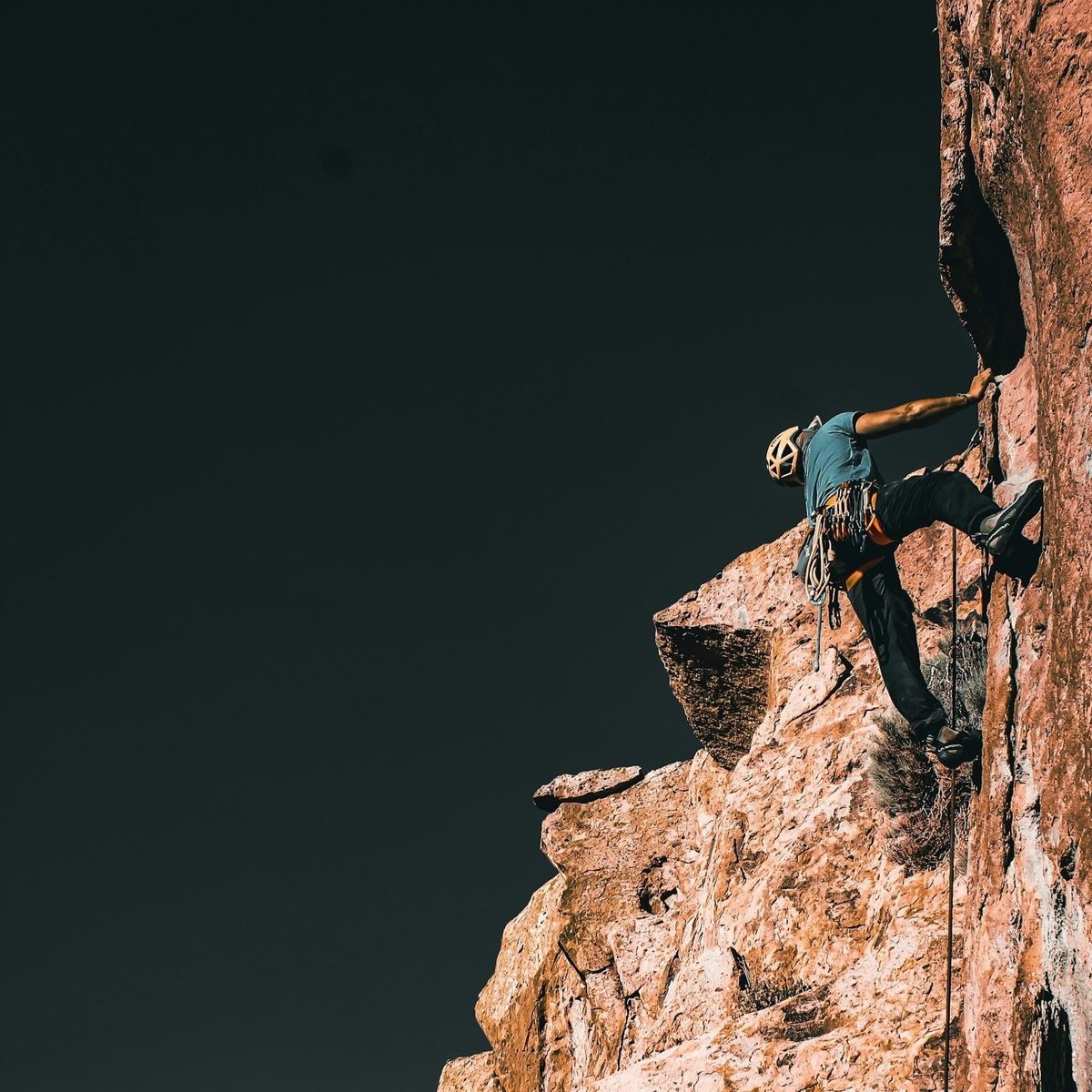
Our first climb was in Clear Creek Canyon. Let me tell you, I’ve never felt less like a superhero in my life. My legs trembled, my arms felt like wet noodles, and I spent half the time clinging to the wall, convinced I was going to die. Meanwhile, Mike was shouting things like, “Trust the process!” and “You’re crushing it!” Spoiler alert: I was not crushing it. But for some inexplicable reason, I kept coming back. Maybe it was the adrenaline rush, or maybe it was the fact that climbing forced me to be present in a way I hadn’t been in years. When you’re 50 feet up, gripping a tiny ledge with your fingertips, you’re not thinking about your past mistakes or what’s waiting for you at the bottom. You’re just focused on the next move.
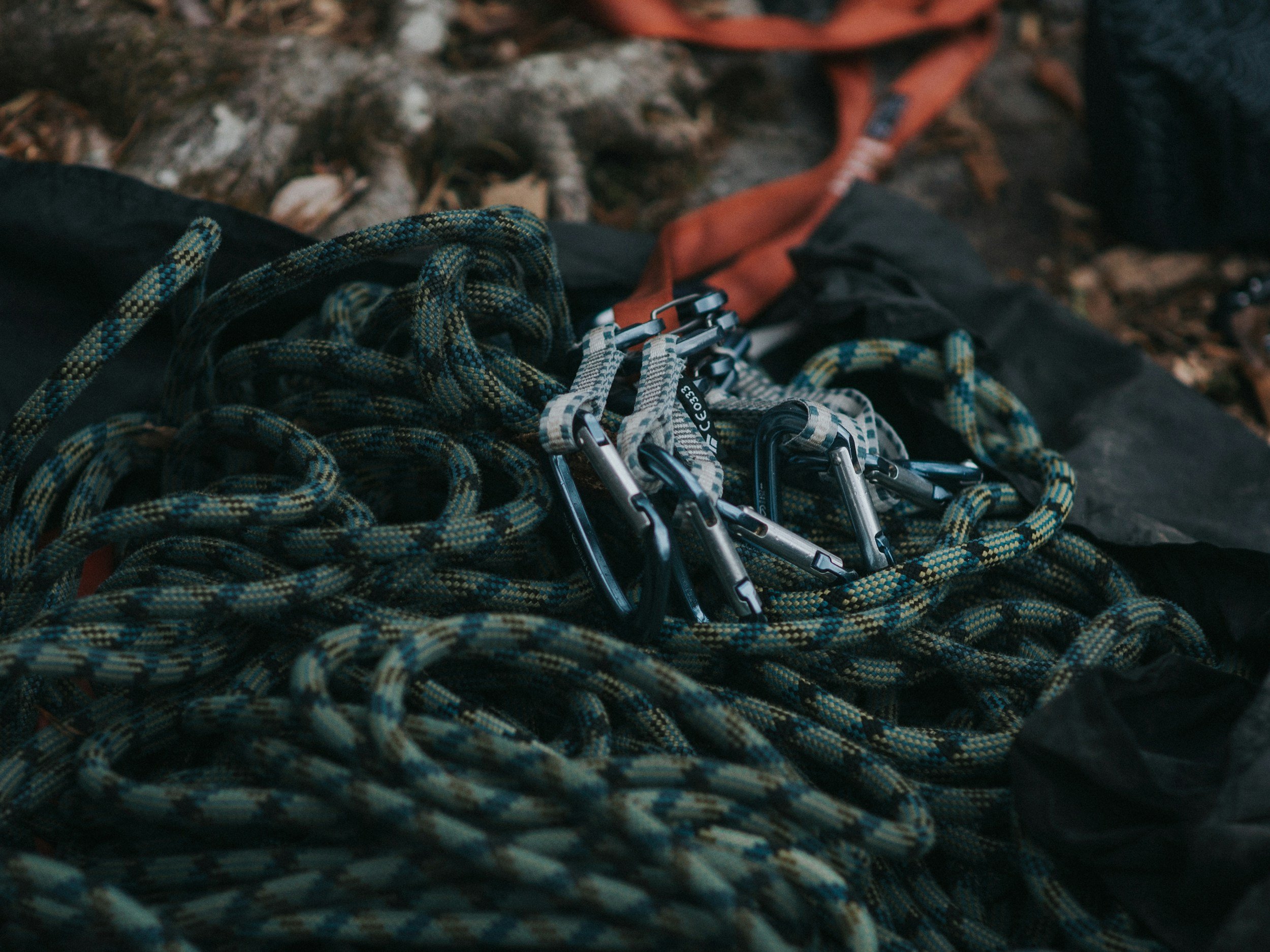
Over time, climbing became more than just a hobby—it became my therapy. Every ascent was a metaphor for recovery: progress was slow, the route was unpredictable, and sometimes I fell. But I always got back up. Mike was my guide, both on the rock and in life, teaching me how to tie knots, set anchors, and, more importantly, trust myself again. He introduced me to a group of sober climbers who quickly became my family. These were people who got it—who understood the unique blend of guilt, gratitude, and grit that comes with sobriety. Climbing wasn’t just about scaling walls; it was about rebuilding my life, one hold at a time. Cheesy, I know.
Sober Outdoors and Finding My Circle
Two years ago, I stumbled upon a group called Sober Outdoors. At the time, it was this grassroots community hosting outdoor events for people in recovery. Rather bootlegged at first to be honest. I’d heard about them through my friend Joe, who’d become a sort of unofficial recruiter for the group. He promised me it wasn’t one of those overly earnest, kumbaya-type deals. “It’s chill,” he said. “Just a bunch of people who like fresh air and don’t drink.” I figured, why not? Worst-case scenario, I’d get some exercise and maybe meet a few people who wouldn’t judge me for showing up in Nikes instead of hiking boots.
My first event was a group hike at Red Rocks. I showed up late, as usual, feeling awkward and out of place. But within minutes, I felt at home. These weren’t just people who understood sobriety; they understood me. And hey, they were awkward too and I liked that. They laughed at my sarcastic comments, matched my dark humor, and didn’t bat an eye when I casually mentioned my past struggles. By the end of the hike, I’d swapped numbers with a few people, including Sarah and Dave, who are now two of my closest friends. We bonded over a shared love of terrible puns, a mutual hatred of cardio, and an unspoken agreement that snacks are the most important part of any outdoor adventure.
Fast forward to today, and the friends I made at those early Sober Outdoors events are part of my inner circle. We call ourselves the “Healing Thru Motion” crew because that’s what we’re all about—moving forward, together. These people aren’t just my hiking buddies; they’re my support system. We’ve climbed mountains, camped under the Colorado sky, and laughed until our sides hurt. And while I don’t make it to as many events these days (dad duties are calling—my wife and I are expecting our first kid!), Sober Outdoors remains a huge part of my journey. If you’re in Denver, you might just see me at an event—diaper bag in tow, of course.
Life Today
These days, life is unrecognizably good. I’m almost four years sober, working as a marketer, and gearing up for fatherhood. My wife jokes that I’m a walking contradiction—deadpan sarcastic but secretly sentimental. She’s not wrong. I still carry the scars of my addiction, but I wear them like a badge of honor. They’re a reminder of where I’ve been and how far I’ve come.
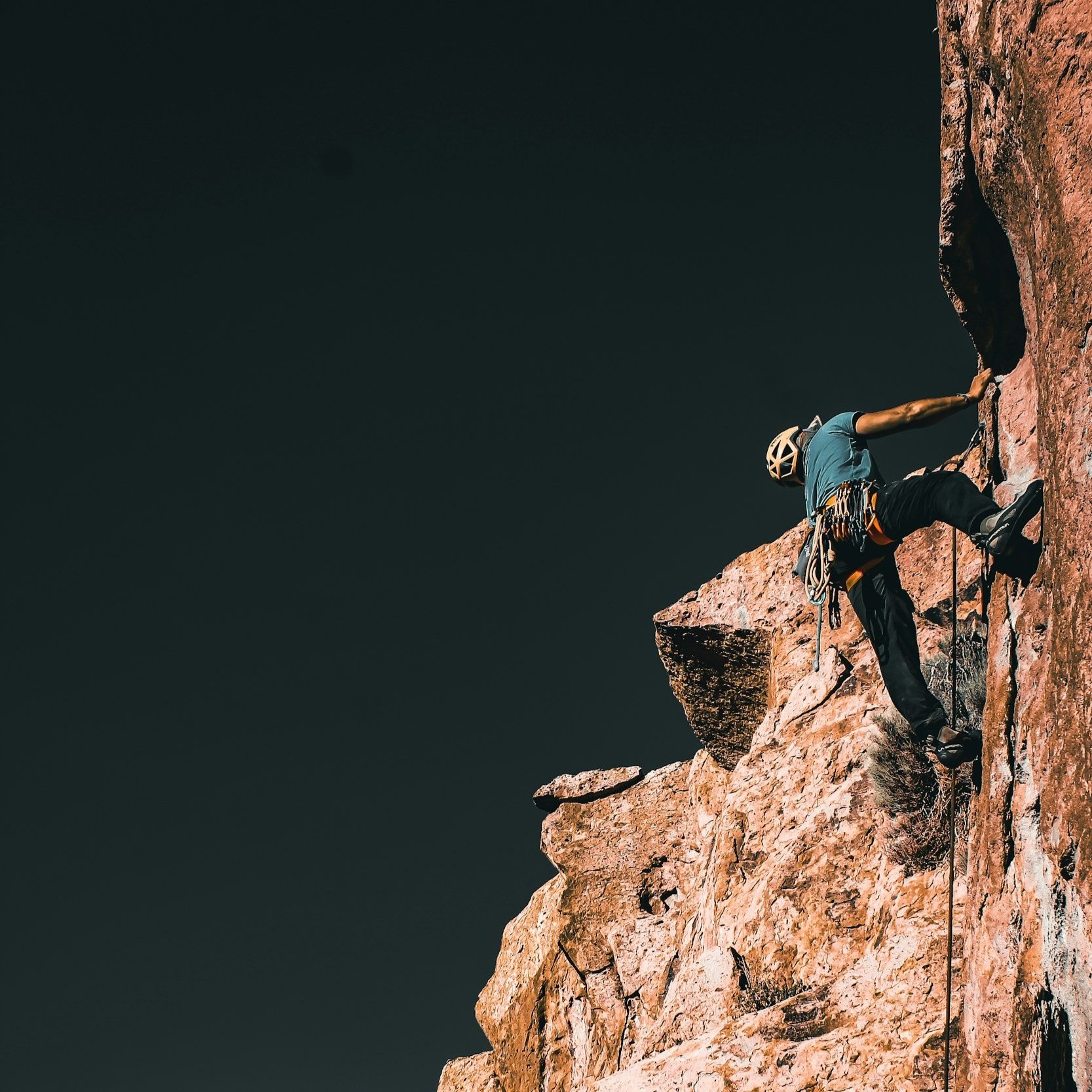
Climbing remains my anchor. Whether I’m scaling a wall in Eldorado Canyon or hiking with my sober crew, the outdoors keep me grounded. Every climb teaches me something new. I’ve learned patience from long, grueling ascents where every step feels impossible. I’ve learned resilience from falling, dusting myself off, and trying again. And I’ve learned gratitude—from reaching the summit and realizing that, despite everything, I’m still here.
One of the biggest lessons climbing has taught me is the value of community. In my darkest days, I thought I had to do everything alone. I’ve since learned that recovery, like climbing, is a team sport. It’s about leaning on your belayer, trusting your partners, and knowing that someone has your back, even when you’re dangling in mid-air.
As I prepare to become a dad, I find myself thinking a lot about legacy. What kind of example do I want to set for my kid? What kind of world do I want them to grow up in? The answers always lead me back to the outdoors. I want my child to know the healing power of nature, the thrill of conquering a mountain, and the joy of finding a community that lifts you up.
Recovery isn’t easy, and it’s definitely not glamorous. But if I’ve learned one thing, it’s this: the climb is worth it. One step, one hold, one day at a time.